

Morning: The Market, Breakfast, and a Slow Coffee
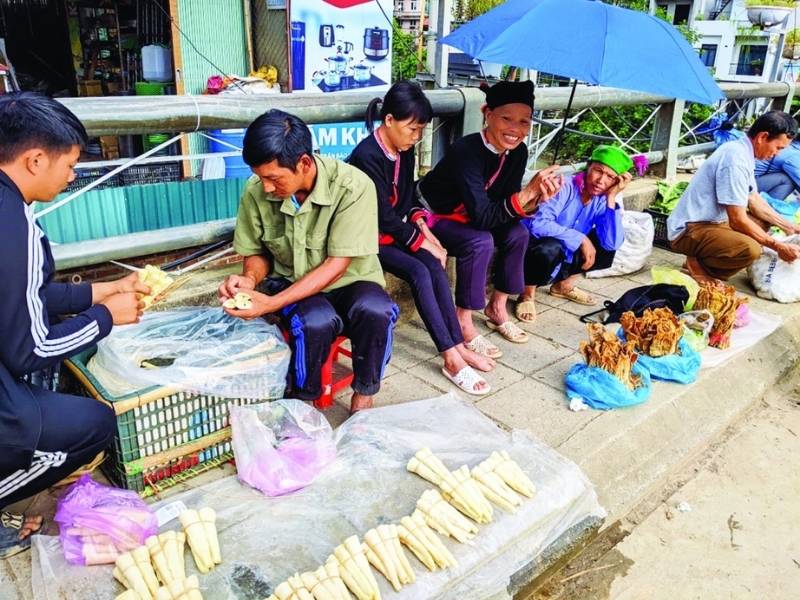
Cho Cao Bang, the city's morning market on Vuon Cam Street, runs 5am to noon and sells fresh produce, meat, fish, and household goods to locals rather than tourists, which makes it a genuine look at daily life and a good spot for photos if you arrive early.
For breakfast, three dishes cover most tastes:
- Bánh cuốn: steamed rice rolls dipped in hot pork broth, the city's best-known breakfast. Our guide to eating like a local in Cao Bang covers where to find the best bowl.
- Phở vịt quay: a hot noodle soup topped with roast duck, with the duck's own rendered fat stirred the broth.
- Phở with grilled meats: the same noodle soup topped with grilled duck, roast pork, or local sausage instead.
Both duck options are easy to find around the Vuon Cam and Hoang Van Thu intersection, and like most breakfast stalls in the city, the good ones tend to sell out by mid-morning.
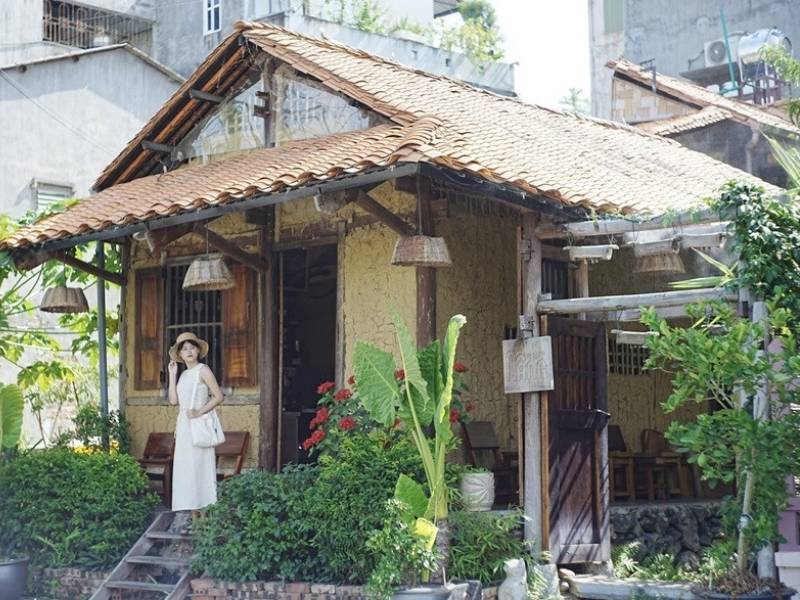
Afterward, a coffee is a good way to slow down before midday. Nâng Café, on the Song Hien riverbank in Song Hien ward, is built materials sourced across the province, stone Quang Hoa, roof tiles Nguyen Binh, and earthen walls raised the way local highland houses traditionally are, run by a young Nung entrepreneur who is open about where and when the beans were roasted.
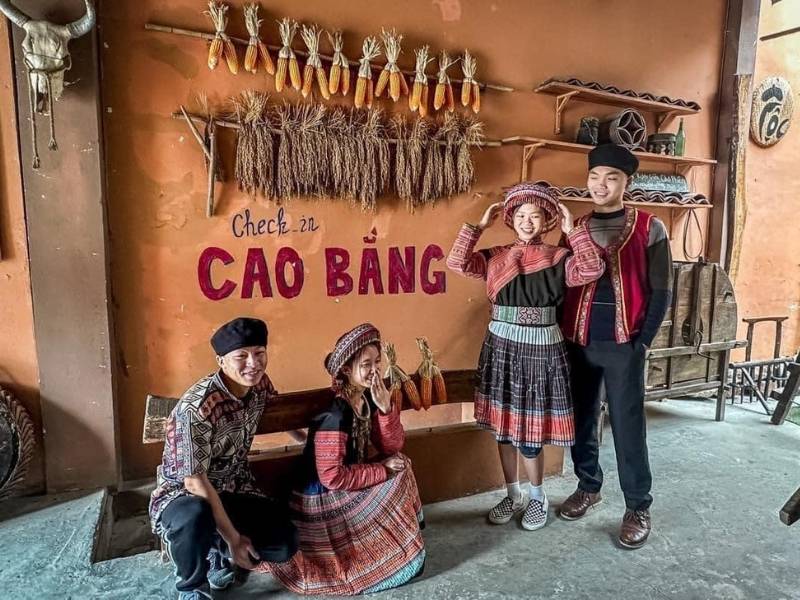
Tộc Cà Phê, on Kim Dong Street, leans further the theme, decorated like a small ethnic museum with antique furniture and traditional dress guests can borrow for photos, open 7:30am with most of the menu under 35,000 VND. Nâng suits a quieter riverside break, while Tộc is the better stop if you want photos in traditional dress along with your coffee.
Midday: The Riverside, the Old Pagodas, and the Provincial Museum
The paved path along the Bang Giang works well for a midday walk once the morning market has quieted down. Locals use it for exercise, and the best stretch runs along the southern bank near Cao Bang Park, a small riverside park with a Ho Chi Minh statue and benches, more a pleasant place to sit than a sight in itself.
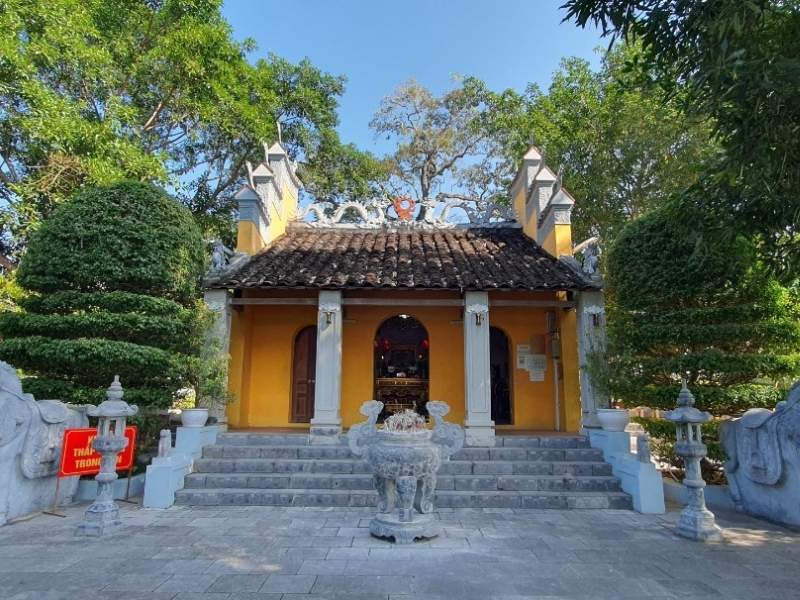
Cao Bang city has a dozen registered historical and cultural sites, and the most visitable are a handful of pagodas and temples scattered across the island, most still active for local festivals rather than set up for tour groups.
- Dong Lan Pagoda: tied to Tran Quy and Tran Kien, two 10th century figures the Anarchy of the 12 Warlords period.
- Da Quan Pagoda and Quan Trieu Temple: adjoining sites honoring General Duong Tu Minh the Ly dynasty.
- Pho Cu Pagoda: built in Nguyen dynasty style, and also tied to the region's revolutionary history.
Cao Bang Provincial Museum, in De Tham ward, is worth an hour if you want more context before or after visiting Pac Bo. A memorial room holds an altar to Ho Chi Minh, and the exhibition halls cover the province's history 1499 to the present, alongside a dedicated exhibit on Viet Nam Doc Lap, the newspaper Ho Chi Minh helped hand-print in Pac Bo and a forerunner of Vietnam's revolutionary press. In the ground floor lobby, visitors can try the old-style printing technique themselves. Entry is free, and it is open every day 7:30am to 11:30am and 1:30pm to 5pm.
Evening: Kim Dong Walking Street and a Rooftop to Finish
7pm to 10pm on Friday, Saturday, and Sunday, the streets around Cao Bang Park close to traffic for Kim Dong Walking Street, and this is the best few hours to be in the city. Stalls sell snacks, small gifts, and clothes, and it is common to see impromptu dancing, games, and live music, with locals often keen to practice their English with visitors passing through. It is a reasonable place to browse for a casual gift, though for the province's real craft souvenirs, made in villages outside the city, our guide to what to buy in Cao Bang covers where to find each one and what to expect to pay. Grilled skewers and other street food are easy to find along the same stretch, and bánh áp chao, crispy duck-filled rice pancakes, are especially good here on a cool evening.
.jpg)
On nights the walking street isn't running, a slow ride around the island is a pleasant way to spend an hour. Locals do it as much for the evening air as to get anywhere in particular, and the loop past the river and back takes about 20 minutes at an easy pace.
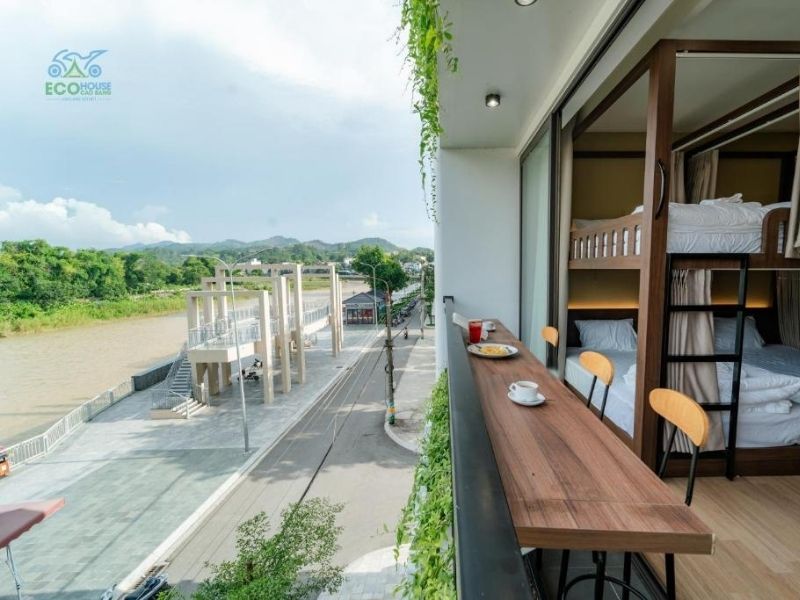
A rooftop drink is a good way to close out the evening before an early start on the loop. Cao Bang Eco House, right on Pho Thau by the river, has its own rooftop with river, mountain, and city views above a ground floor coffee shop, and it is a convenient stop whether or not you are staying there.
What Cao Bang City Isn't
Cao Bang city is not where you will find the province's postcard scenery, and it is worth being clear about that before you plan too much time here. Each of the following needs a half day or more outside the city by rented motorbike or organized tour, not a stop you can fold a city stroll:
- Ban Gioc Waterfall: about 85 km away.
- Angel Eye Mountain: around 30 km away.
- Pac Bo historical site: close to 55 km north, near the Chinese border.
If you want a full route mapped out rather than picking stops one by one, our Cao Bang Loop tour options lay out several itineraries by length and pace. For where to sleep before or after, see our guide to where to stay in Cao Bang.
Frequently Asked Questions
How much time do you need in Cao Bang city?
Half a day covers it well if you are just passing through, but save it for the last day of your loop if you can. A couple of hours cover the market, riverside, and pagodas, while a full day and night let you catch the walking street and a rooftop drink before you head home. Most travelers spend one or two nights here, using the city as a base before and after the loop rather than a multi-day stop.
Is Cao Bang city worth visiting on its own?
As a standalone destination, not particularly. As a base with a genuinely lively Friday to Sunday evening scene, a real local market, and a handful of century-old pagodas, it is a reasonable way to spend a rest day between longer rides.
What is the best day to visit Kim Dong Walking Street?
Friday, Saturday, or Sunday between 7pm and 10pm, when the street closes to traffic and stalls, music, and games fill the space. On weeknights, the same street is open to traffic and only the smaller night food market runs.

Have 0 comments, reviews about What to Do in Cao Bang City: One-Day Guide
Hello. Please leave a comment, we will respond soon.