


Short answer: plan on not flying anywhere on the Cao Bang Loop. It is not only Ban Gioc: the official Ministry of National Defence map shades the whole border strip as restricted airspace, so a flight permit is required whatever your drone weighs. The under-250g exemption does not reach it, and registration is separate.

mid-September each year, Vietnam's northern mountains turn gold as the rice ripens. Cao Bang's version of that season has a shape of its own: the gold lies flat across valley floors hemmed in by limestone, follows the Quay Son River down to the foot of Ban Gioc Waterfall, and climbs terraces mainly in the west, around Nguyen Binh. Non nuoc, the name the province's UNESCO Global Geopark carries, literally means "mountains and water", and Vietnamese use it as a word for the homeland itself. In Cao Bang it reads almost like a map legend: karst peaks stand in the middle of the fields, rivers run along their base, and rice fills the scarce flat ground in between. That is why the harvest here so often shares the frame with a cliff or a river bend rather than a hillside of steps.

Most Cao Bang Loop budgets online have the same two problems: the totals do not add up to the line items above them, and refundable deposits get counted as money spent. This breakdown uses published rates an operator based in Cao Bang city, separates what you spend what you get back, and shows its working so you can rebuild it for your own trip.
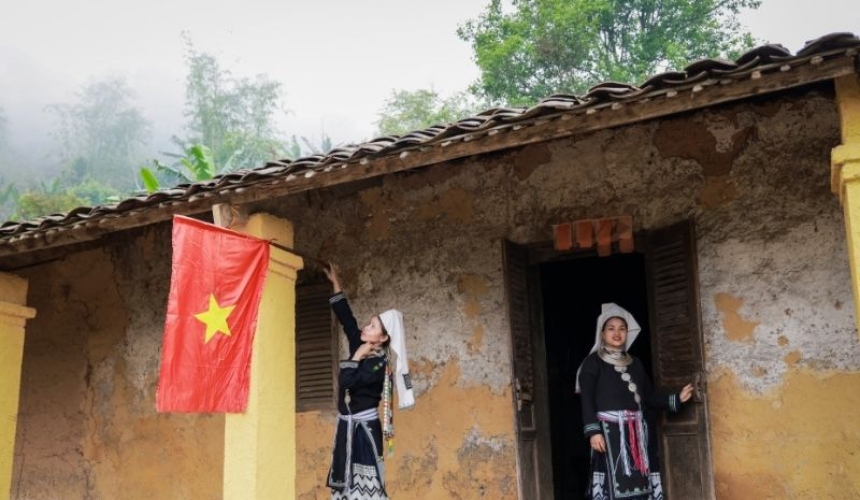
Most people ride the Cao Bang Loop eastwards, towards Ban Gioc Waterfall and the karst valleys, and never turn west. Nguyen Binh is the other half of the province: a cold, forested plateau of tea hills, bamboo groves, Dao Tien villages and abandoned French mining villas, sitting between Cao Bang city and Bao Lac. It is also the part of Cao Bang whose map changed most recently, and almost every English guide online still has the old one.
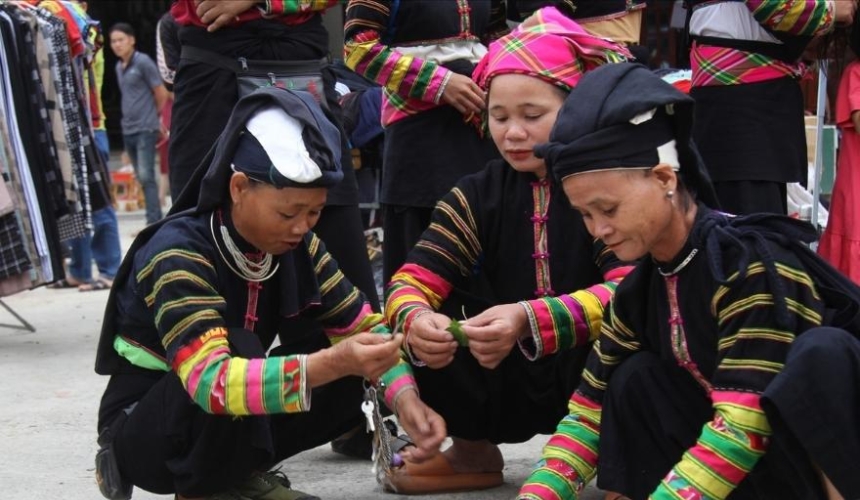
Bao Lac is a small riverside town in western Cao Bang province, northern Vietnam, sitting on the Gam River between the Ha Giang Loop and the Cao Bang Loop. It is best known for its five-day cycle market, the Black Lo Lo villages in the hills above town, and its role as a quiet overnight stop between Meo Vac and Cao Bang city. Bao Lac is not a destination built around large attractions; it is a slow-travel stop for riders who want local markets, ethnic villages and quieter mountain roads away the busier parts of northern Vietnam. Older signage, booking sites and blogs still say "Bao Lac district" and "Kim Cuc commune". This guide explains what changed, how to reach the town, what to do while you are there, and whether Bao Lac deserves a night on your route.
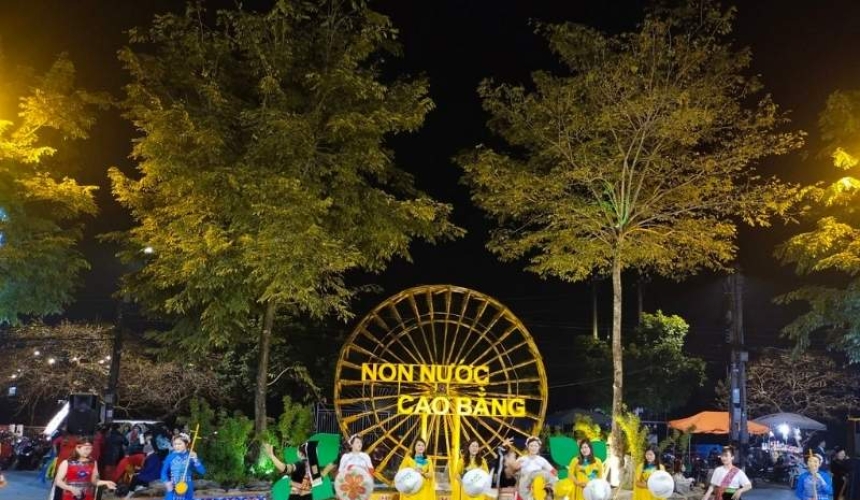
Save Cao Bang city for the last day of your trip. Half a day covers the market, riverside, and pagodas, but staying the full day and night lets you catch the walking street, a rooftop drink, and the streets coming alive after dark. It works well as a base before and after the loop, but if you came for the province's real highlights, those sit 30 to 90 km outside the city. The city sits on an island formed where the Hien and Mang rivers merge the Bang Giang, roughly 2 km long and 1 km wide, connected to the mainland by a single strip of land. Nearly everything below is within a 20 minute walk of that island, so you won't need a motorbike to get around during the day, though cruising it slowly in the evening is its own kind of local pastime.
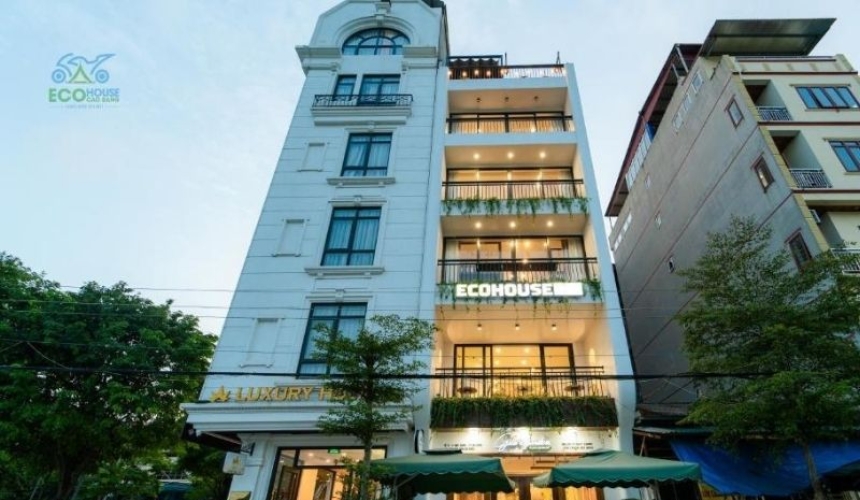
Cao Bang has more overnight options than most travelers expect, spread across the city center, the mountains, and a handful of villages along the loop. Base yourself in Cao Bang city center for full motorbike and loop support, add a camping night at Angel Eye Mountain if your route passes through Tra Linh, and only book near Ban Gioc Waterfall if you want the falls before the first tour bus arrives. A few quieter stops, Phong Nam Valley, the indigo village at Quang Uyen, and Ba Quang Grass Hill, are worth knowing about if you have extra days. This guide breaks down each area by who it actually suits, what a room costs, and what to check before you book. It also covers what loop riders specifically need that a generic hotel review does not: secure motorbike parking, flexible check-in for overnight bus arrivals, and hosts who can tell you if a mountain pass is closed.
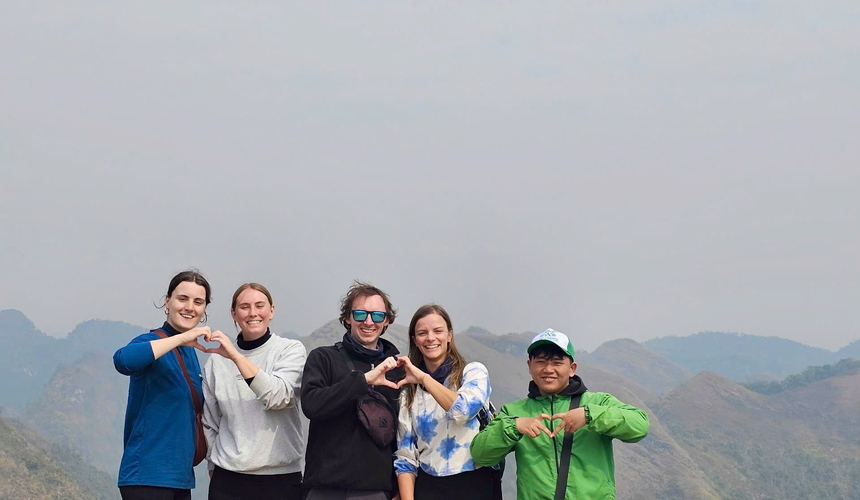
Away from Cao Bang’s busier attractions, Ba Quang Grass Hill is a quiet stop for travellers who enjoy open landscapes, short walks and a slower pace. Reaching the hill takes some planning, but the spacious grassland, limited development and option to stay overnight make it a worthwhile detour for those with enough time in their Cao Bang itinerary. This guide provides the practical details needed to plan the visit with realistic expectations.
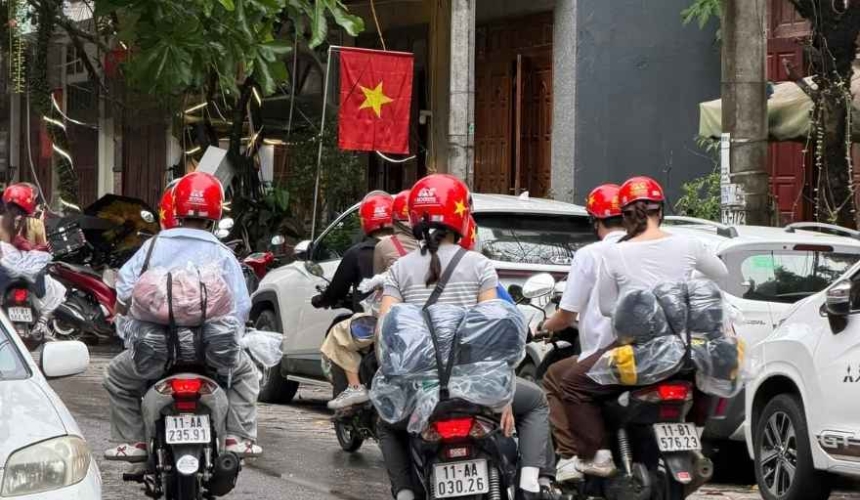
There is no single motorbike that suits everyone riding the Cao Bang Loop. The right bike is one whose controls already feel familiar, whose height and weight you can manage comfortably, and whose passenger and luggage setup matches your planned route. In this guide, we will help you identify the most suitable type of motorbike for this mountain journey, based on the practical experience of the local team at Cao Bang Eco Travel.
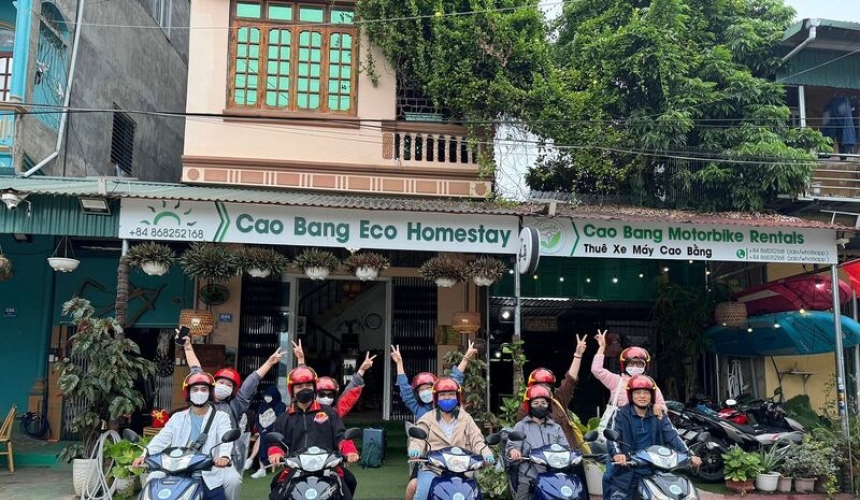
Planning a trip to Cao Bang often means choosing between a guided loop, an easy rider, a self-riding tour, a motorbike rental, and several places to stay. Before booking, most travelers want to know the same things: Is the operator legitimate? What did previous guests actually experience? And which option is realistic for their riding ability and expected level of comfort? To answer those questions, we reviewed feedback across seven TripAdvisor listings covering Cao Bang Eco Travel and its related services. The strongest themes are careful easy riders, flexible local guides, well-prepared bikes, and practical support before, during, and after the loop. The ratings are strong, but a five-star score cannot tell you whether you should self-ride, whether a camping night will feel too basic, or whether Eco Homestay or Eco House better matches your expectations. This guide looks beyond the headline ratings to explain what travelers praise, what limitations they mention, and who each service is best suited to.
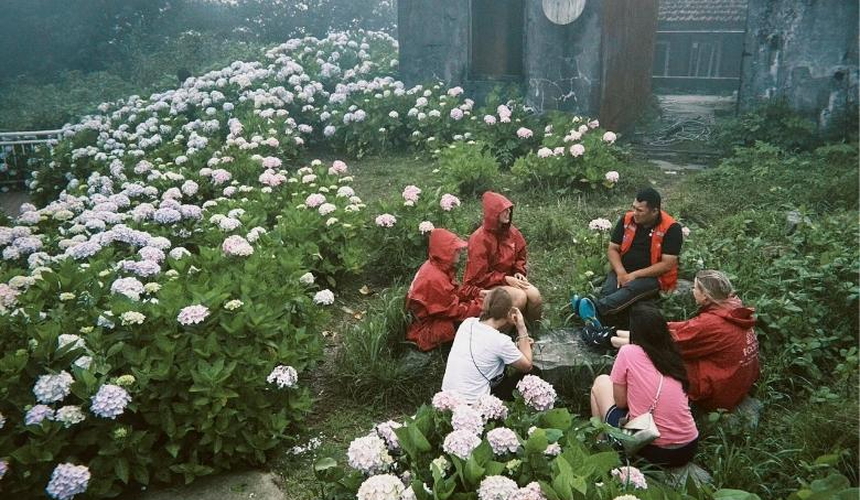
TL;DR: Not every Cao Bang Loop trip needs a permit. Most main tourist sites are open; a permit may be required in some border areas outside designated tourist, service or economic zones. Fee: USD 10 per person, within 5 working days. Check your exact route first.

Before traveling to Vietnam or Cao Bang, it is important to check whether you need a visa. The answer depends on your passport, how long you plan to stay and whether you will enter Vietnam once or more than once. For most tourists who are not visa-exempt, the Vietnam e-visa is the simplest option. This guide explains the key rules, fees, processing time and common mistakes to avoid before departure.
