

Best Places for Camping in Cao Bang
Angel Eye Mountain / Nam Cha Valley
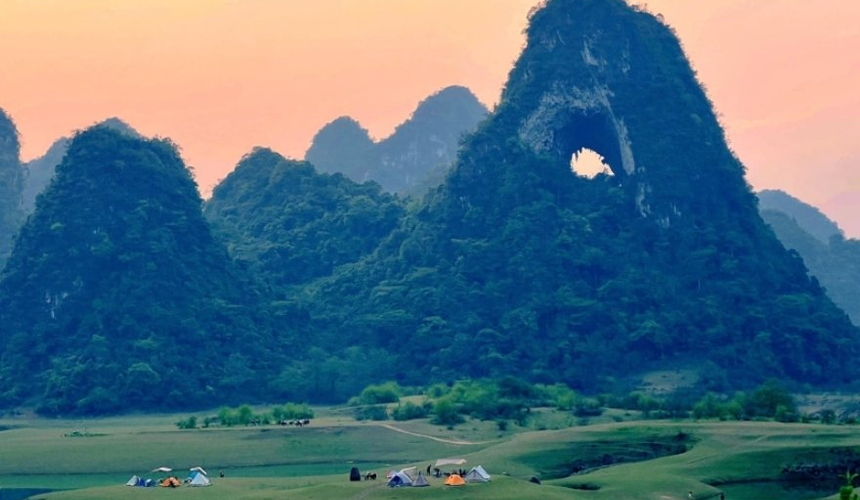
Angel Eye Mountain, also known as Nui Mat Than, is the strongest camping choice in Cao Bang for travelers who want a scenic but not-too-difficult overnight experience. Set in the Nam Cha Valley area, it offers wide open space, limestone mountains, quiet countryside, and the famous natural “eye” overlooking the valley.
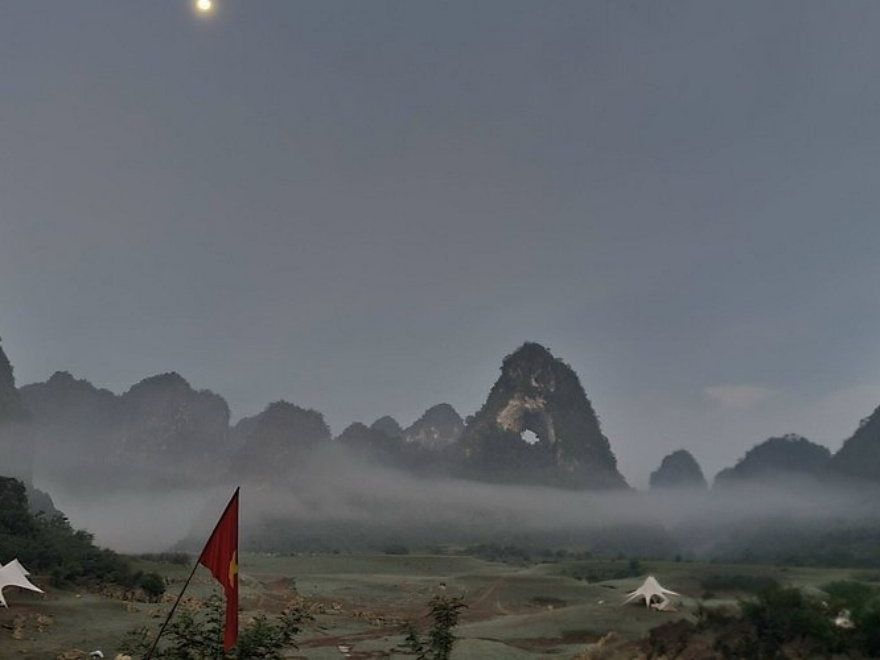
For camping, the drier months are usually easier because the ground is more suitable for tents, outdoor dinner, sunset views, and sunrise photography. The landscape can change a lot after rain or during the wet season, so it is better to check local conditions before planning an overnight stay.
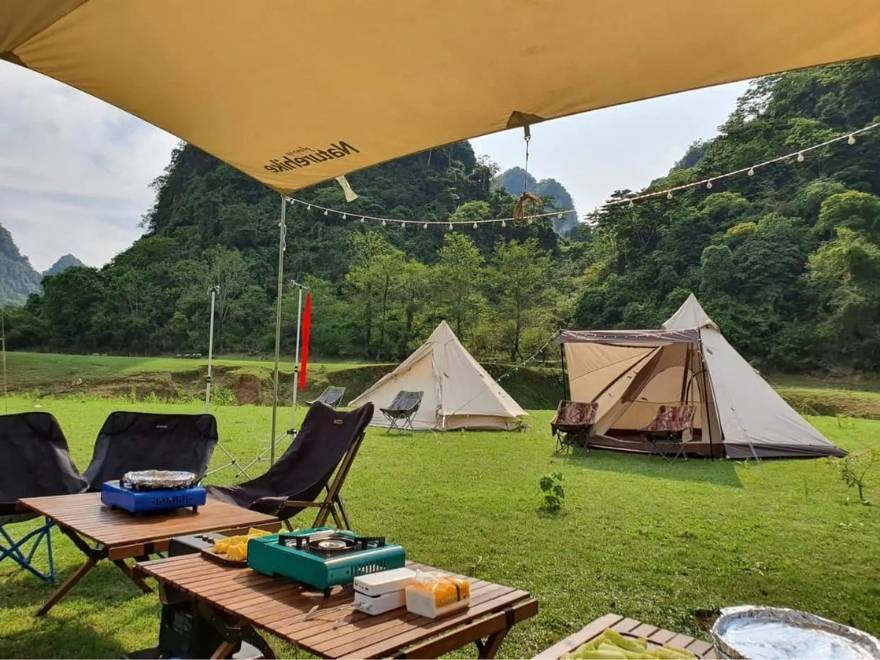
This spot is best for first-time campers, couples, photographers, and small groups who want a memorable night in nature without a technical trek. Local support is useful for choosing a suitable campsite, arranging meals, checking access, and adjusting the plan if the weather changes.
For more details about the mountain itself, how to visit it, and what to do nearby, read our full Angel Eye Mountain travel guide.
- Takeaway: If travelers only have one night for camping in Cao Bang, Angel Eye Mountain is the strongest choice.
Thang Hen Lake Area
Thang Hen Lake is not the place where most travelers should randomly pitch a tent for the night. It works better as a relaxed stop after Angel Eye Mountain, especially if you want water views, limestone scenery, and a gentler camping-style experience.
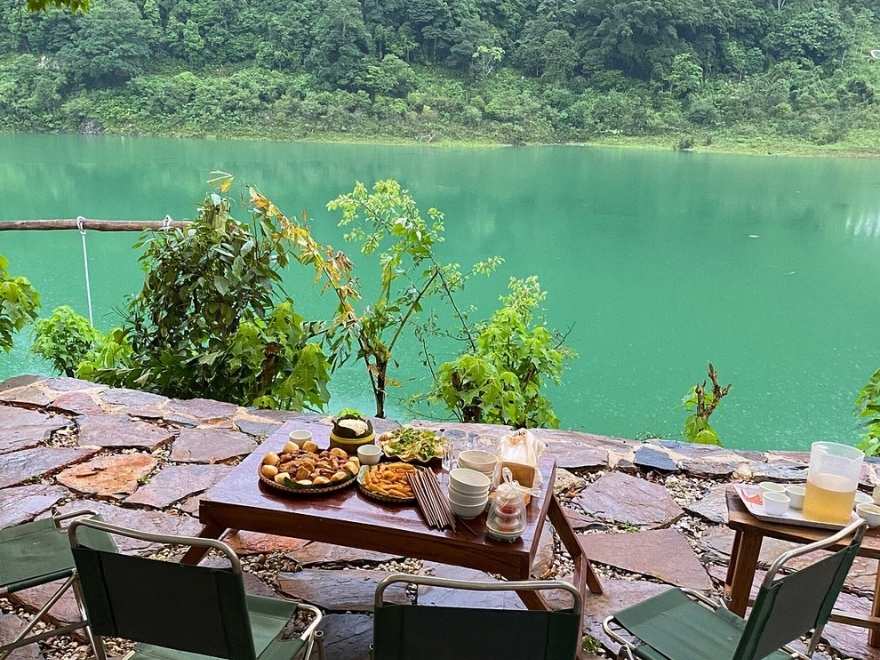
Compared with Angel Eye Mountain, Thang Hen feels less wild and more arranged. In some seasons, there may be tent setups, outdoor meals, short walks around the lake, campfire moments, or light activities such as SUP and boating. But these are not guaranteed all year. They depend on the weather, water level, local permission, and what services are available at the time.
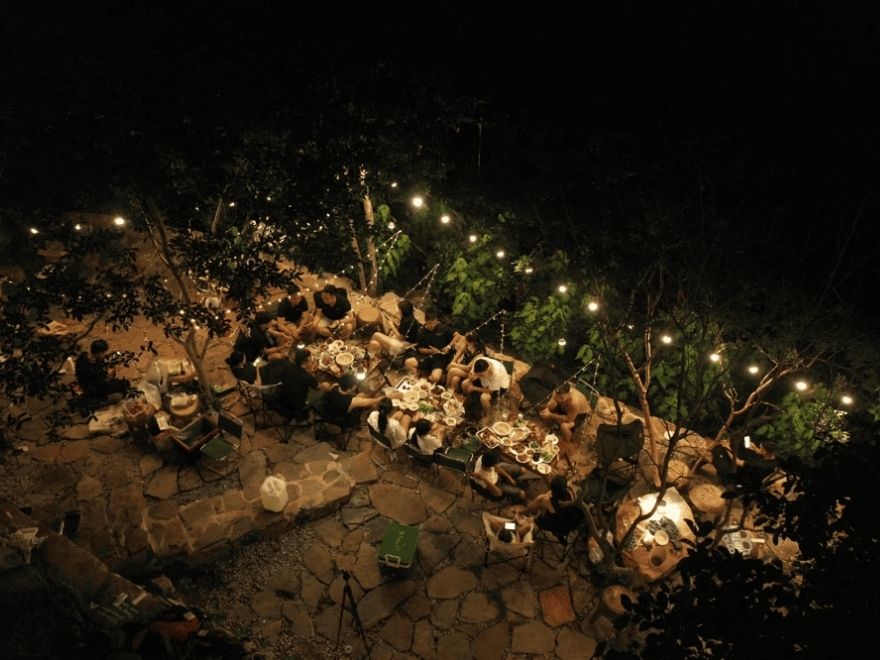
So, Thang Hen is best treated as part of a planned Cao Bang camping route, not as a place to show up and camp anywhere.
Ba Quang Burning Grass Hill
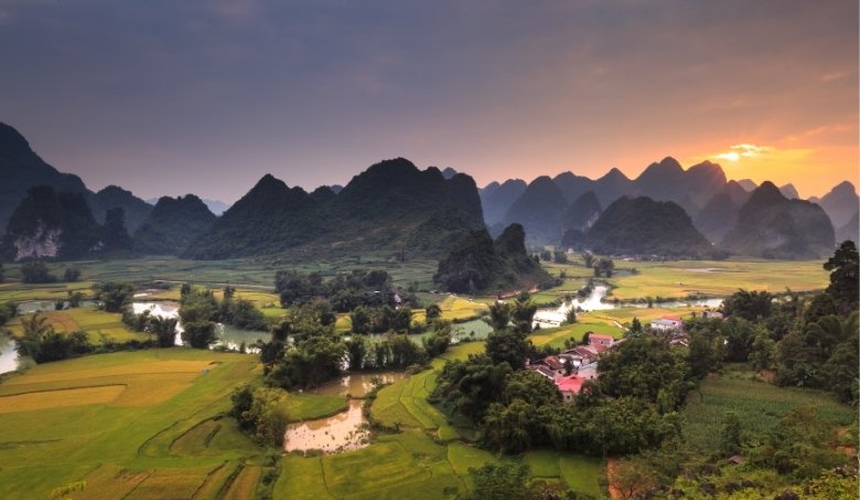
Ba Quang Burning Grass Hill is a good option for travelers who want a more open, cinematic camping scene in Cao Bang. Located in the Vinh Quy area of Ha Lang District, this place is known for its rolling grass hills, wide views, and golden-orange “burnt grass” landscape during the cooler months.
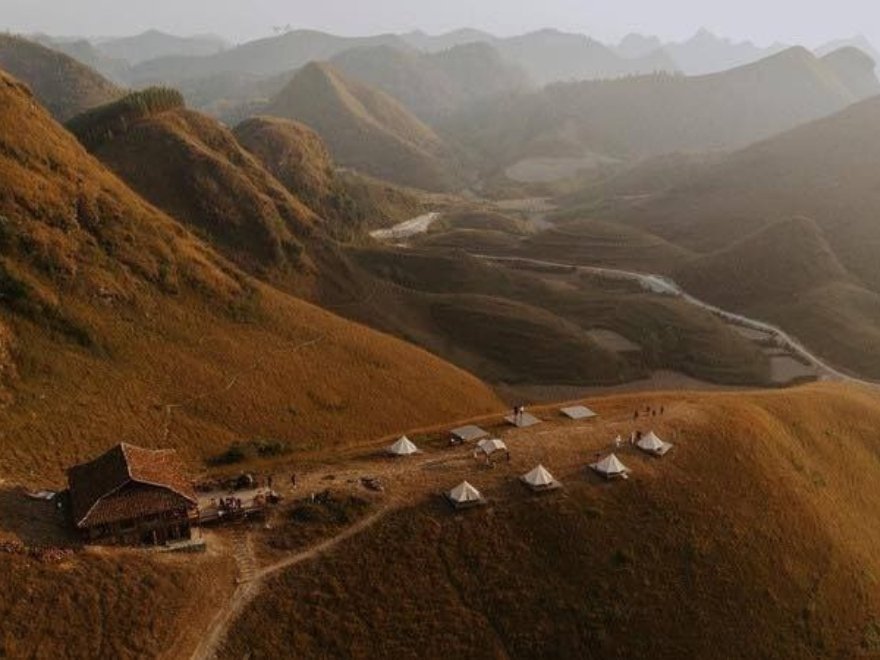
Unlike Angel Eye Mountain, which feels more like a valley campsite, Ba Quang is mainly about space, light, and photography. It is especially beautiful around sunrise or sunset, when the hills turn warm and dramatic. On clear, moonless nights, the open landscape can also make Ba Quang a good place for stargazing and Milky Way photography, although visibility always depends on weather, moon phase, and sky conditions.
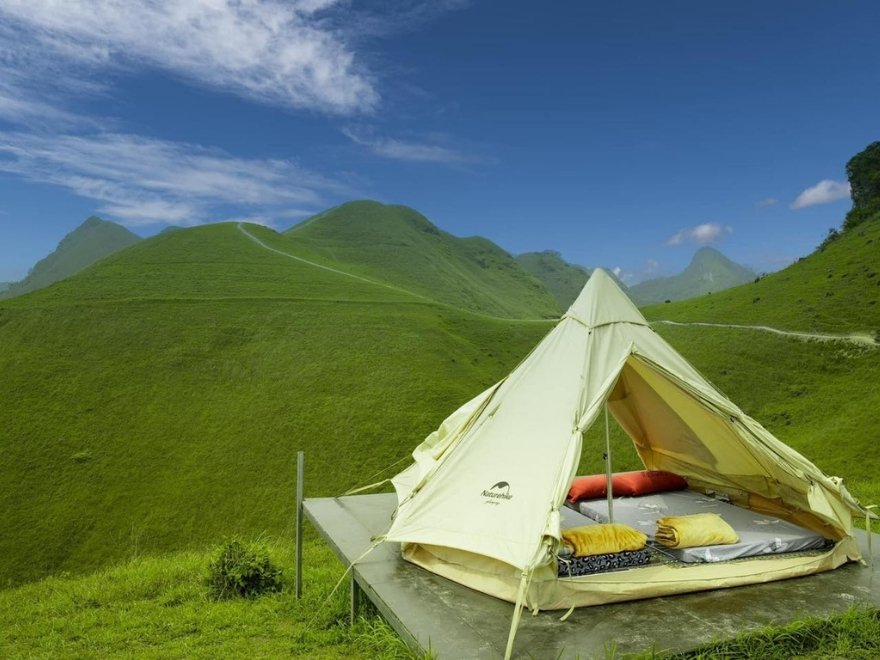
Ba Quang can work for camping, picnic-style stops, or a simple overnight experience, but travelers should understand that services in the area are still very limited. At the moment, Ba Quang Panorama is the main homestay in the area and offers camping near its property, which is the easier option if you want some local support.
Independent camping is also possible, but it requires more preparation. The grass hills are open and exposed, so weather, wind, cold nights, water, food, phone battery, lighting, and personal belongings all need to be considered carefully. Do not expect shops, restaurants, toilets, electricity, or campsite facilities to be easily available once you are on the hill.
Ban Gioc Waterfall Area
Ban Gioc Waterfall is one of the most famous natural highlights in Cao Bang and a beautiful stop to combine with a camping itinerary. With its wide cascades, limestone mountains, and the Quay Son River flowing through the border landscape, it is an impressive place for sightseeing, photography, a short boat ride, or a relaxed daytime picnic. Travelers can bring a picnic mat, sit by a suitable open area, enjoy the view, and spend a slow moment near the waterfall before continuing the route.
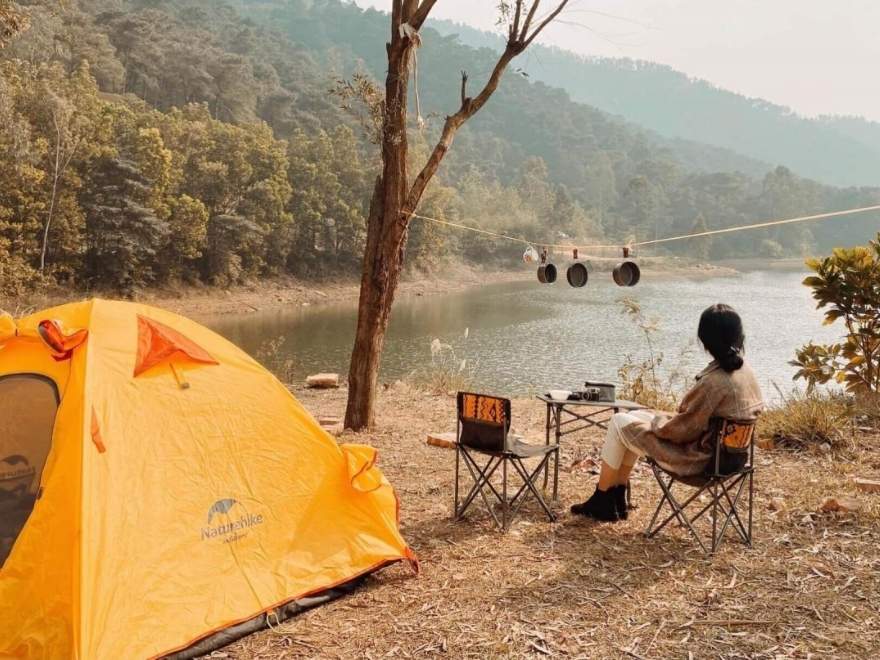
However, Ban Gioc should not be treated as an overnight camping spot. The waterfall area is a managed tourist site and lies directly on the Vietnam–China border, so pitching a tent near the waterfall or staying overnight in the area is not allowed. For this reason, it is better to visit Ban Gioc during the day and choose another suitable place nearby if you want to camp overnight.
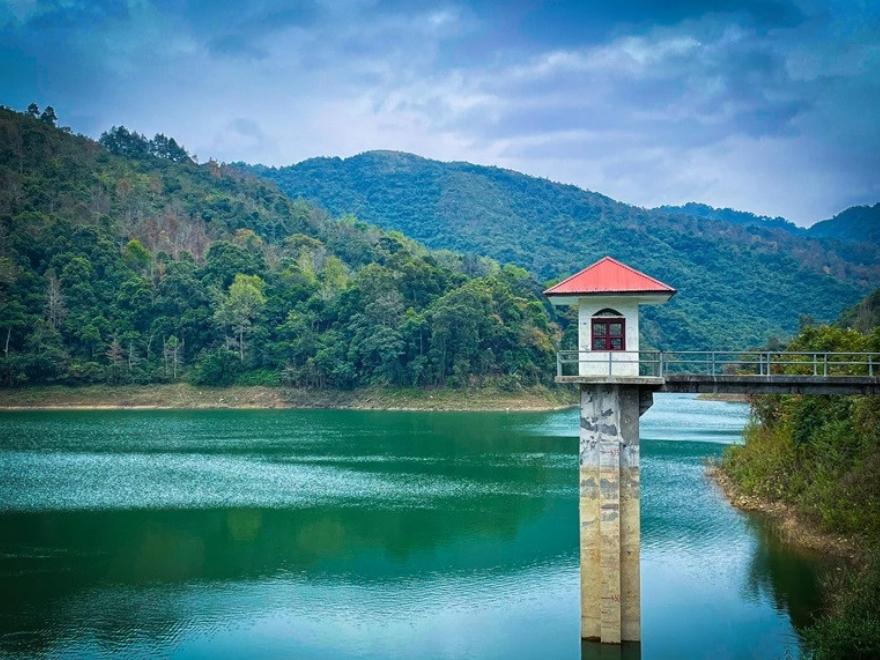
Some possible overnight camping alternatives around the wider Ban Gioc area include quiet sections along the Quay Son River, Thang Thoong Got, also known as Little Ban Gioc, or Ban Viet Lake. These places are not too far from the waterfall and can offer a more suitable setting for an overnight outdoor experience.
Homestay + Camping Combo
For many travelers, the easiest way to camp in Cao Bang is not to go completely off-grid, but to stay close to a local base. This is where a homestay + camping combo makes sense. You can still sleep close to nature, have dinner outdoors, and wake up in a quiet mountain setting, but you are not totally alone if the weather turns cold, it rains, or something needs to be adjusted.
Cao Bang Eco Travel is a good example of this kind of local setup. Instead of offering only a bed or only a tour, they have built a small travel ecosystem in Cao Bang: homestay and hostel-style stays, food, motorbike rental, local tours, transport support, and overnight camping. For travelers, this means the trip is easier to connect: you can arrive in Cao Bang, rent a motorbike, ask about the route, join a camping experience, or switch to a homestay if the weather is not ideal.
This option is especially useful for first-time campers, couples, families, or foreign travelers who want the outdoor feeling without having to handle every detail alone. A local team can help with meals, campsite setup, road conditions, luggage, weather changes, and the small practical things that make a camping night smoother.
Can You Wild Camp in Cao Bang?
Wild camping sounds tempting in Cao Bang, but it does not mean you can simply find a quiet field, open your tent, and stay overnight. Many places that look empty may actually be farmland, village land, private property, protected landscapes, tourist areas, or zones close to the border.
The safest rule is simple: ask first. A local host, guide, homestay owner, or villager can usually tell you where camping is acceptable and where it is better not to stay. This is not only about rules, but also about respect for local communities and your own safety.
Before choosing a campsite, keep these points in mind:
- Do not camp on farmland, village land, or private land without permission.
- Avoid areas close to the Vietnam–China border, military zones, or places that feel sensitive.
- Do not set up your tent inside historical sites, protected areas, forest zones, or managed tourist attractions unless camping is clearly allowed.
- Stay away from riverbanks, streams, and lake edges during rainy weather, as water levels and ground conditions can change quickly.
- Be very careful with fire. Only make a campfire if it is allowed and safe, and make sure it is completely out before leaving.
- Take all your rubbish with you, including food waste, plastic, cigarette ends, and anything left from a fire.
- If you are a foreign traveler, it is much safer to camp with a local guide, host, or arranged camping setup.
In some forest areas, protected sites, or border-sensitive zones, camping without permission can also cause legal trouble. So if you are not sure, do not guess. Ask locally or choose an arranged campsite instead.
What to Pack for Cao Bang Camping
What you need to pack depends on the way you camp. If you join an arranged camping experience, the heavy items are often taken care of for you. If you camp independently, you need to be much more prepared, because many camping spots in Cao Bang are far from shops, electricity, toilets, clean water, or phone signal.
Essential Items for All Travelers
Even if your tent, dinner, and campsite are arranged, you should still bring your own personal basics. Cao Bang can feel warm during the day, but nights in open valleys, grass hills, and mountain areas may become windy, damp, or colder than expected.
Bring:
- Warm layers for the evening and early morning
- A light rain jacket, especially from May to September
- Comfortable walking shoes with good grip
- Insect repellent
- A flashlight or headlamp
- A power bank
- Drinking water
- Personal medicine
- Basic toiletries
- A small backpack for water, camera, jacket, and daily items
The most common mistake is packing only for the daytime. Once the sun goes down, a camping night in Cao Bang can feel very different from a normal sightseeing day.
Extra Items for Independent Campers
If you plan to camp without a local operator, prepare as if you will have to handle everything yourself. Do not expect easy access to shops, electricity, drinking water, toilets, or cooking equipment once you reach the campsite.
You may need:
- Tent
- Sleeping bag
- Sleeping mat
- Cooking equipment
- Food supplies
- Trash bags
- First-aid kit
- Waterproof bags
- Navigation backup, such as an offline map or saved route
Independent camping gives you more freedom, but it also means you are responsible for your own comfort, safety, meals, waste, and weather plan.
What You May Not Need on a Guided Camping Tour
A guided camping tour can make the experience much lighter. Depending on the setup, you may not need to bring your own tent, cooking equipment, dinner setup, campsite arrangement, or local route plan.
You may not need to prepare:
- Tent
- Cooking equipment
- Dinner setup
- Campsite arrangement
- Local route planning
This is especially useful if you are a first-time camper, traveling as a couple or family, or visiting Cao Bang from abroad without camping gear. You still get the feeling of sleeping close to nature, but with less pressure to organize everything by yourself.
If you prefer this easier option, take a look at Cao Bang Eco Camping to see what an arranged overnight camp at Angel Eye Mountain can include, from tent setup and outdoor meals to local route support.

Have 0 comments, reviews about Cao Bang Camping: 5 Best Places, Safety & Packing Tips
Hello. Please leave a comment, we will respond soon.