
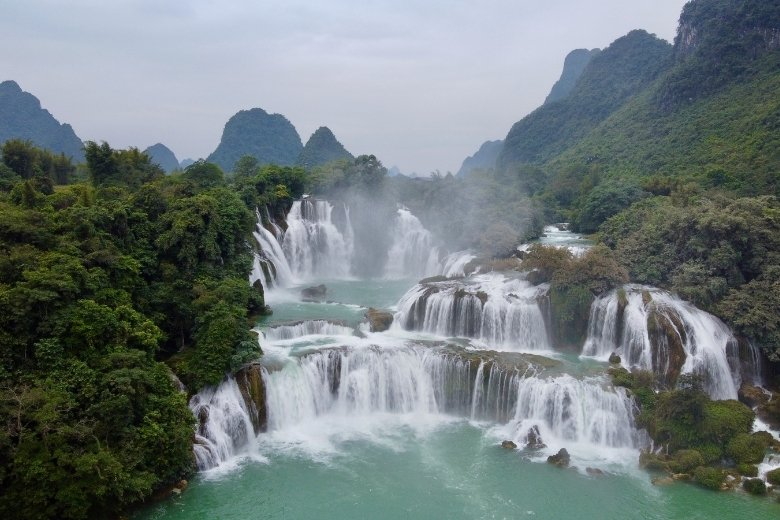
Where Is Cao Bang in Vietnam?
Cao Bang is a mountainous province in northeastern Vietnam, located about 283 km Hanoi. The journey usually takes around 6 hours by car, depending on traffic, weather and road conditions. The provincial city, also named Cao Bang, is the most convenient base for food, accommodation and onward transfers to the province’s main sights.
Geographically, Cao Bang borders China to the north, Tuyen Quang province to the west, Thai Nguyen province to the south-west, and Lang Son province to the south-east. For travel planning, however, many routes and older travel references may still mention familiar names such as Ha Giang or Bac Kan, especially when talking about journeys toward Ba Be or the northern mountain loop.
What matters most for travelers is that Cao Bang’s highlights are spread across different mountain areas. Ban Gioc Waterfall and Nguom Ngao Cave sit toward the Trung Khanh border area, Pac Bo lies in another direction, while places such as Phong Nam Valley and Angel Eye Mountain need flexible timing. So, even if the map looks simple, a good route matters more than just choosing a list of places.
Why Cao Bang Is More Than Ban Gioc Waterfall
When travelers first hear about Cao Bang, Ban Gioc Waterfall is often the name that comes up first. It is the province’s most iconic sight, but it should not be the only reason to come here. Cao Bang is part of Non Nuoc Cao Bang UNESCO Global Geopark, a wider landscape of limestone mountains, caves, valleys, rivers, rural villages and borderland scenery.
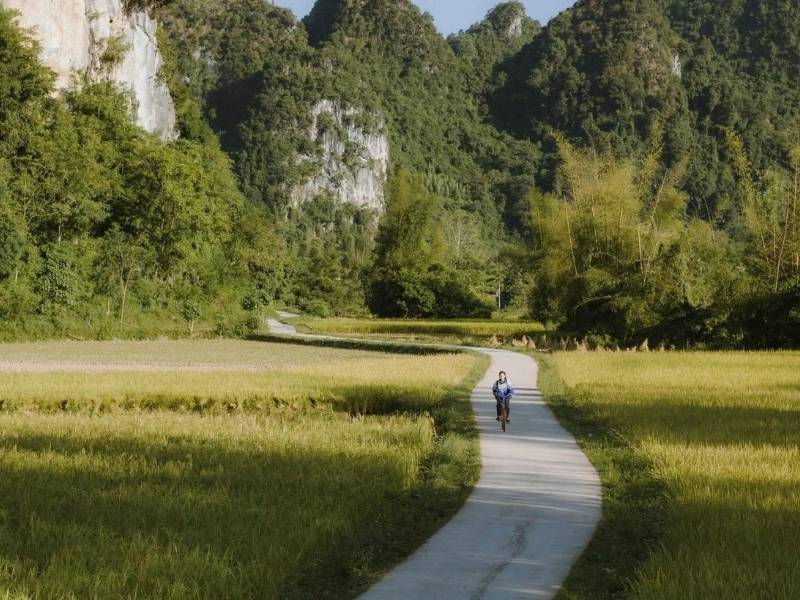
This makes Cao Bang feel less like a single-attraction stop and more like a slow landscape journey. Beyond Ban Gioc, the province offers places such as Nguom Ngao Cave, Pac Bo, Phong Nam Valley, Angel Eye Mountain, craft villages, local markets and distinctive food traditions shaped by Tay and Nung culture.
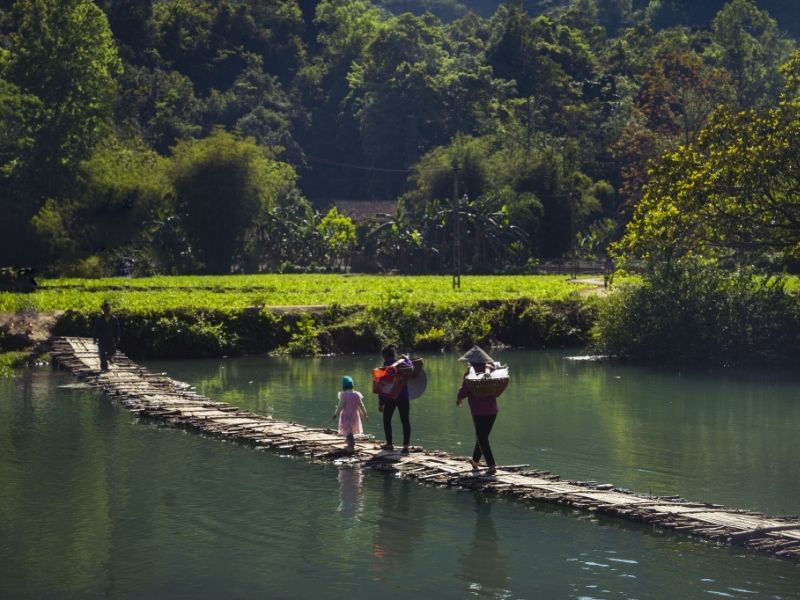
Cao Bang is worth visiting if you enjoy nature, photography, quiet roads, local food and a less commercialized side of northern Vietnam. It may not be ideal if you only have one or two spare days, dislike long road journeys, or expect the same level of tourism infrastructure as Sapa, Ninh Binh or Halong Bay.
Best Things to Do in Cao Bang
Ban Gioc Waterfall
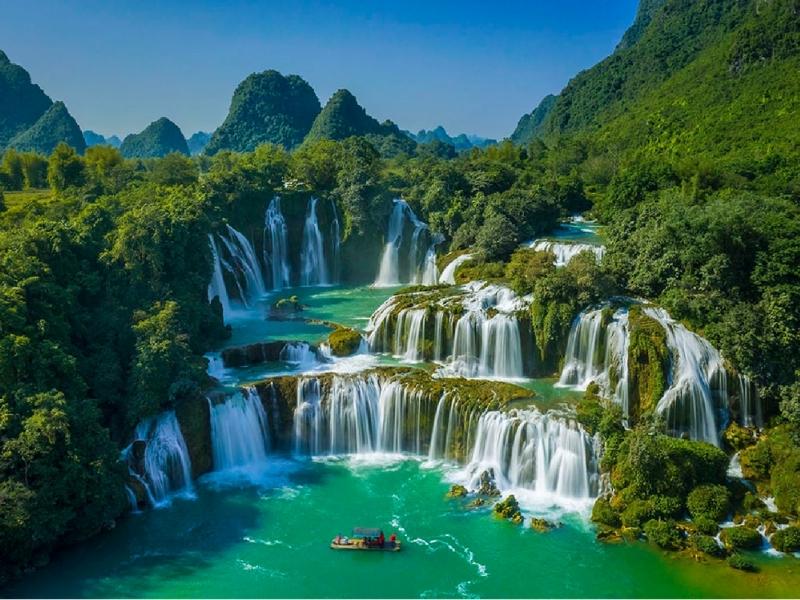
Ban Gioc Waterfall is the landmark most travelers associate with Cao Bang and the main reason many first hear about the province. Located near the Vietnam-China border, it stands out for its wide cascades, limestone scenery and strong borderland atmosphere. It is best combined with nearby Nguom Ngao Cave and Khuoi Ky Stone Village, but it should be seen as the starting point of a Cao Bang journey, not the whole trip. For practical tips on timing, tickets, boat rides and what to combine nearby, read our full Ban Gioc Waterfall Travel Guide.
Nguom Ngao Cave
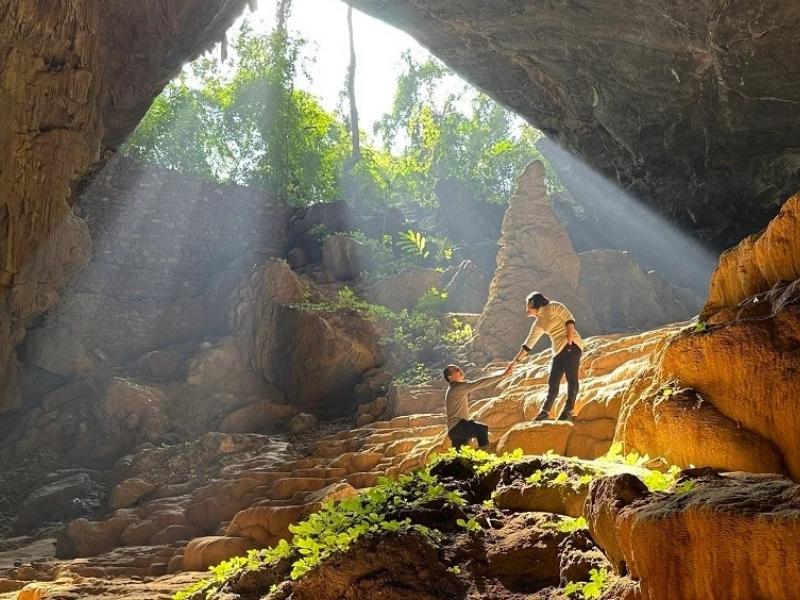
Just a short drive Ban Gioc Waterfall, Nguom Ngao Cave adds a completely different atmosphere to the day. After the open river scenery of Ban Gioc, the cave brings travelers cool underground chambers, limestone formations, flowing water and a quieter sense of mystery. It works especially well for those who want to experience Cao Bang’s karst landscape beyond the surface, without turning the day a heavy expedition.
Khuoi Ky Stone Village
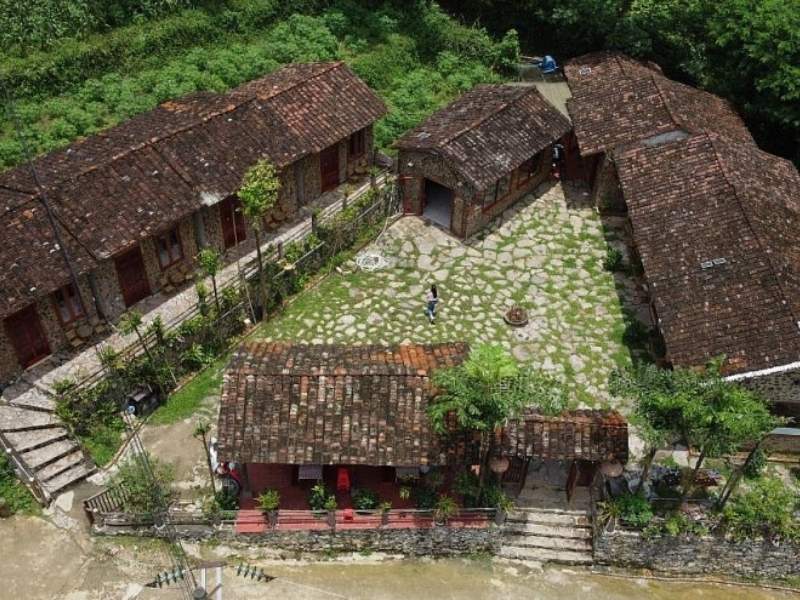
Khuoi Ky Stone Village is a small Tay village near Ban Gioc Waterfall and Nguom Ngao Cave, known for its traditional stone stilt houses and quiet mountain setting. It is not a big sightseeing attraction, but it adds an important cultural layer to a Cao Bang trip, especially for travelers interested in village life, local architecture, photography and slow travel. A short walk through Khuoi Ky works well after Ban Gioc and Nguom Ngao, as long as the visit is respectful: walk slowly, ask before taking photos of people, and remember that this is a living village, not a staged attraction.
Phong Nam Valley
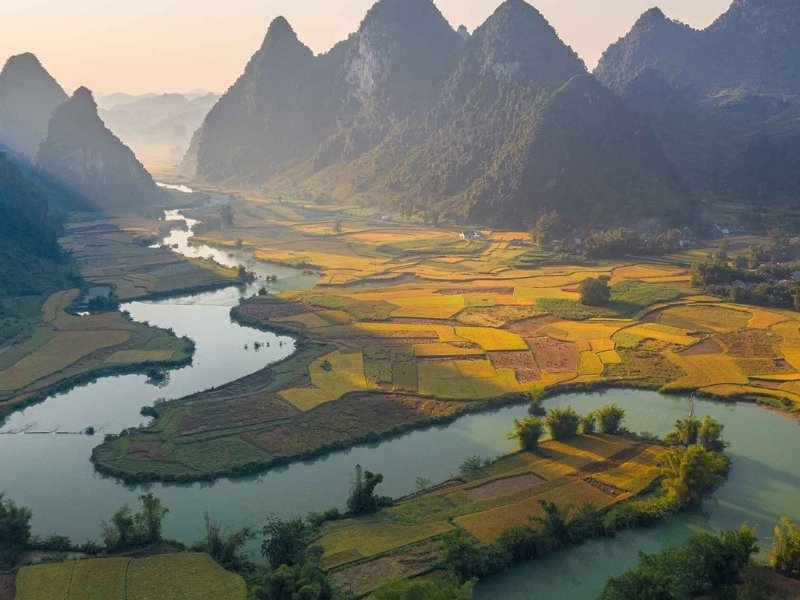
Phong Nam Valley is where Cao Bang slows down rice fields, river bends, limestone peaks and quiet Tay villages. Rather than a quick check-in stop, it suits travelers who enjoy slow walks, cycling, photography and rural scenery. If your itinerary allows 4 to 5 days in Cao Bang, Phong Nam adds a softer, more local side to the journey beyond Ban Gioc and the main sights. Read more in our Ngoc Con and Phong Nam Valley Guide.
Angel Eye Mountain
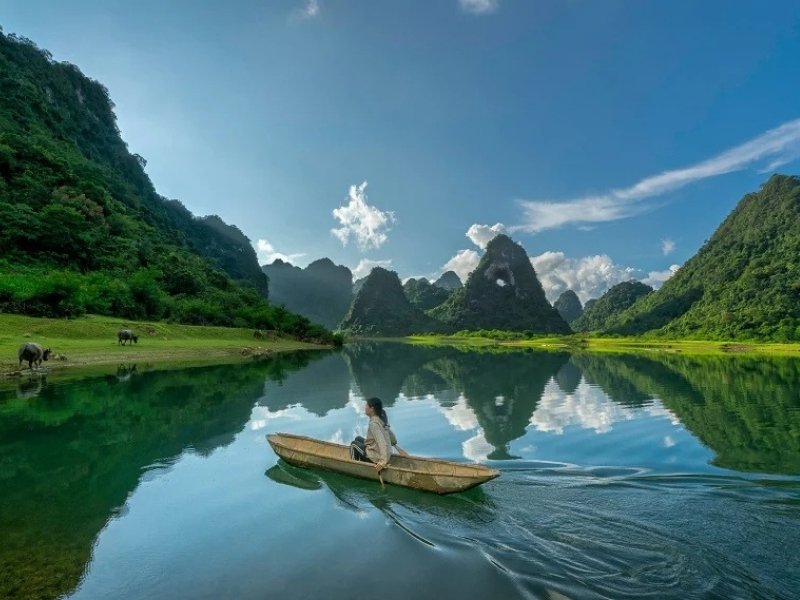
Angel Eye Mountain, also known as Thung Mountain or Nui Mat Than, gives Cao Bang a more open and cinematic landscape, with a natural circular opening in the mountain overlooking a wide valley. It is a good stop for travelers who enjoy quiet scenery, light walks, photography or a simple picnic atmosphere rather than a major tourist site. If you arrive in Cao Bang in the afternoon, this can be a gentle first stop before a fuller day toward Ban Gioc. Keep the plan flexible in the rainy season, as access roads can become muddy or slower than expected.
Pac Bo Cave
Pac Bo Cave adds a historical layer to a Cao Bang journey. Located north of Cao Bang City, this peaceful valley is closely linked to Ho Chi Minh’s return to Vietnam in 1941 and the early revolutionary period. For travelers, the appeal is not only the cave itself, but also the quiet setting of Lenin Stream, limestone cliffs, forest paths and small relics that make the history feel more connected to the landscape. Pac Bo is worth adding if you have 3 to 4 days in Cao Bang, but it may be skipped on a very short route focused mainly on Ban Gioc and Nguom Ngao. Read more in our Pac Bo Cave Cao Bang Guide.
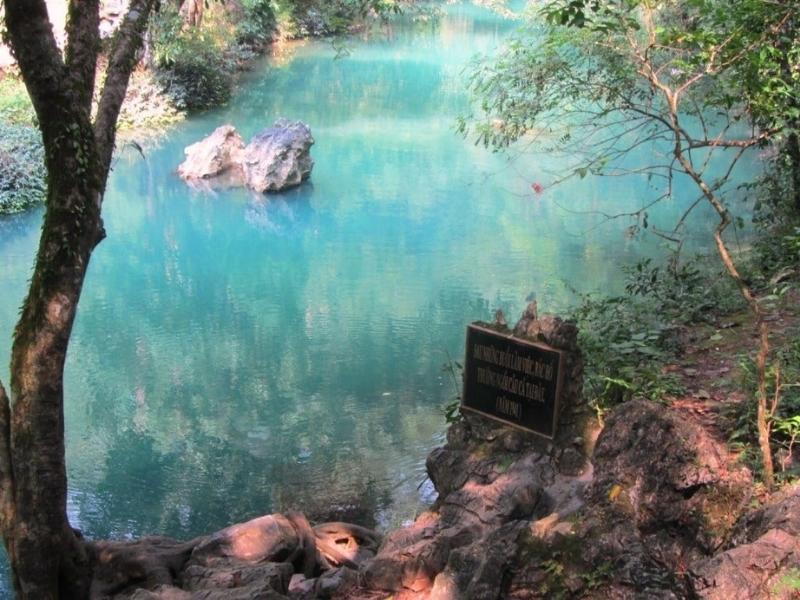
Co La Waterfall
Unlike Ban Gioc, Co La Waterfall feels quieter and more intimate, with a softer landscape of falling water, green space and village scenery in Trung Khanh. It is a good optional stop for travelers who enjoy nature, picnic-style breaks, camping atmospheres or lesser-known places beyond the main tourist route. The area is also connected to Tay village life, which gives the visit a more local feeling if your route allows enough time. If you plan to swim or get close to the water, stay cautious, as natural waterfall areas may not have full safety supervision.
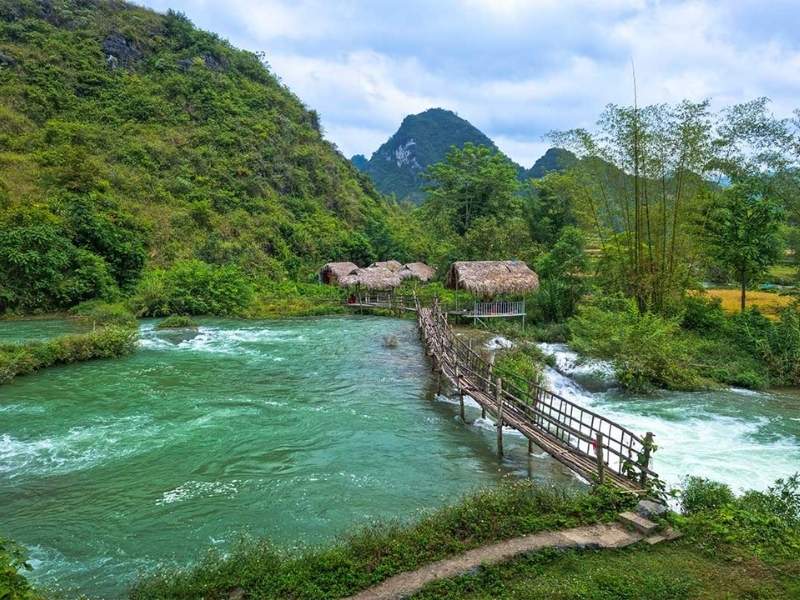
Local Food and Markets
Cao Bang’s local food scene adds another layer to the trip, especially if you make time for a market, a homestay meal or a simple breakfast stop. Look for roasted duck pho, Cao Bang-style rice rolls served with hot broth, Trung Khanh chestnuts, seasonal persimmons and other mountain products. If your route allows, a local market such as Bao Lac, Trung Khanh, Quang Uyen or Nguyen Binh can show a more everyday side of the province, with fresh produce, handmade goods, breakfast stalls and people gathering nearby villages. Market days usually follow local lunar calendars, so check the timing before you plan around one. Read more in our Cao Bang Food Guide.
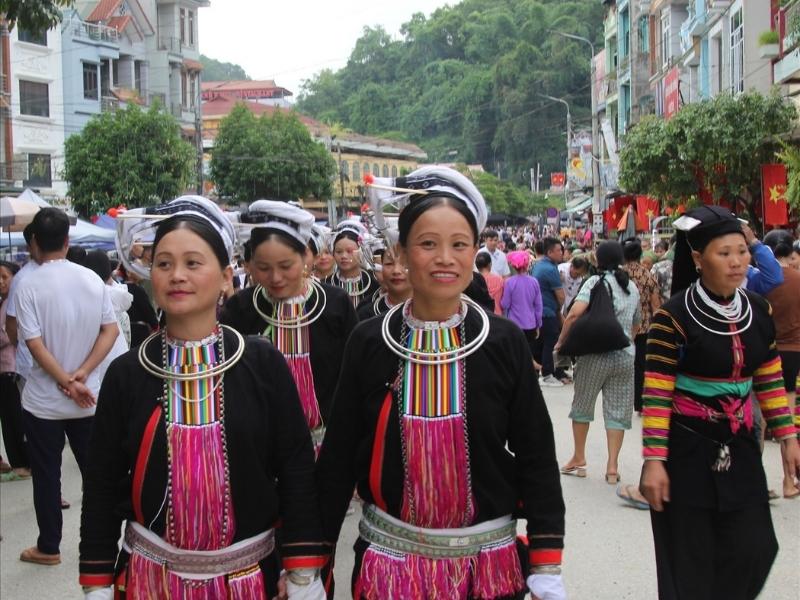
Craft Villages
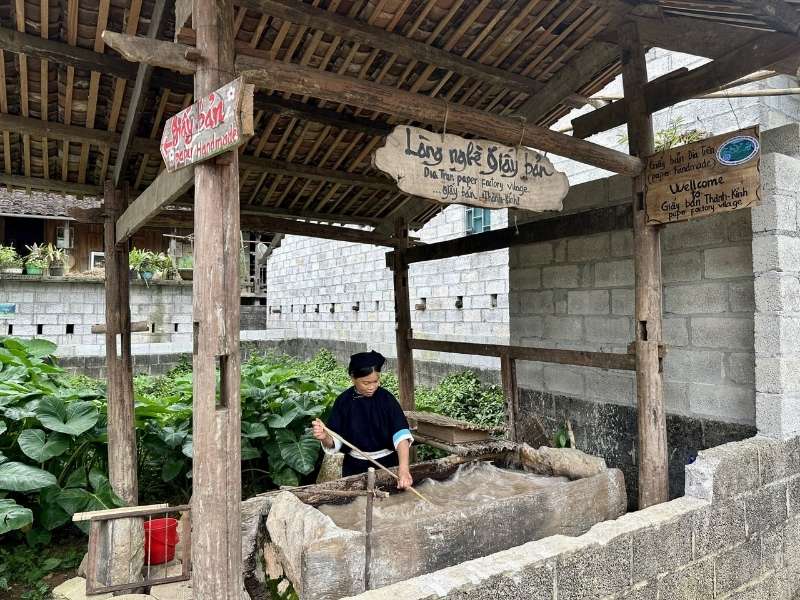
Cao Bang’s craft villages bring a quieter cultural side to the province, beyond waterfalls, caves and mountain roads. In villages such as Phia Thap, Dia Tren or Phuc Sen, travelers can find traditional incense-making, handmade paper and blacksmithing still connected to everyday life. These stops suit slow travelers who enjoy watching local skills, small workshops and heritage that is still used rather than simply displayed. They are best added to a flexible route, not treated as guaranteed workshops, since access and activity levels may depend on the day and local arrangements.
How to Plan Your Cao Bang Trip
For most travelers, Cao Bang is reached by road Hanoi. The journey usually takes around 6 to 8 hours, depending on traffic, weather, road conditions and the type of transport you choose. This is why Cao Bang should be planned as a multi-day trip rather than a quick add-on Hanoi.
| Planning question | Quick guidance |
|---|---|
| Main gateway | Hanoi is the most common starting point for international travelers. |
| Day bus / limousine | A good option if you prefer daytime travel and mountain scenery, but you may arrive in Cao Bang in the afternoon. |
| Overnight sleeper bus | Useful for saving daytime travel and one hotel night, but sleep quality varies. |
| Private car | Best for families, senior travelers, small groups or anyone wanting flexible stops. |
| Motorbike | Only suitable for experienced riders who are comfortable with mountain roads and legal driving requirements. |
| Minimum time | 3 days is the practical minimum for a first Cao Bang trip. |
| Better pace | 4 to 5 days gives more room for Ban Gioc, caves, valleys, villages and local culture. |
| Airport | Cao Bang does not currently work as a practical flight destination for most travelers. |
An overnight sleeper bus can help save time, especially for travelers with a tighter schedule. Still, it is not a perfect solution for everyone. If you do not sleep well on buses, avoid planning a heavy sightseeing day right after arrival. For families, older travelers or visitors combining Cao Bang with Ban Gioc, Ba Be or Ha Giang, a private car often makes the route smoother and less tiring.
>>> Read more: Hanoi to Cao Bang
Suggested Cao Bang Itineraries
How long you spend in Cao Bang changes the whole rhythm of the trip. A short route can cover the main highlights, but a slower journey gives you more time for valleys, craft villages, local food, photography and the quieter side of the province. The ideas below are best understood as route styles starting Cao Bang City. If you are traveling Hanoi, remember to add the long road journey before and after the trip.
| Duration | Best for | Route idea |
|---|---|---|
| 2 days / 1 night | Travelers already in Cao Bang with limited time | Focus on the Ban Gioc area and nearby highlights such as Nguom Ngao Cave, Khuoi Ky Stone Village, Ban Gioc Waterfall and one scenic stop if timing allows. |
| 3 days / 2 nights | First-time visitors who want a balanced route | Add more breathing room for Ban Gioc, Nguom Ngao, Khuoi Ky, Ngoc Con, Angel Eye Mountain, Thang Hen Lake and Pac Bo’s Lenin Stream area. |
| 4 days / 3 nights | Travelers who want the full Cao Bang Loop feeling | Go deeper valleys, craft villages, Ban Gioc, Phong Nam, Thang Hen, Angel Eye Mountain, Pac Bo, Khau Coc Cha Pass, bamboo forests and the Phia Oac area. |
| 5 days or more | Slow travelers, photographers and culture lovers | Add more time for village stays, local markets, Co La Waterfall, Phong Nam Valley, craft villages, or connect Cao Bang with Ba Be. |
A common mistake is planning too much on the first day. If you leave Hanoi in the morning, you may only reach Cao Bang in the afternoon, so keep the arrival day light. A gentle stop such as Angel Eye Mountain, a short village visit or simply resting in Cao Bang City will usually feel better than forcing a long mountain route immediately.
Want to explore Cao Bang without rushing?
If you are not sure how many days to spend or how to connect Ban Gioc Waterfall, Nguom Ngao Cave, Khuoi Ky Stone Village, Angel Eye Mountain, Pac Bo and the craft villages smoothly, a local tour can make the journey much easier. Cao Bang Eco Travel can help you plan a private route Cao Bang City or Hanoi, with flexible pacing, local drivers and routes designed around your travel style.
What About the Cao Bang Loop
The Cao Bang Loop is not an official route name on the map. It is a travel-style term inspired by the more famous Ha Giang Loop, used to describe a road journey around Cao Bang’s waterfalls, caves, craft villages, limestone valleys, border landscapes and quiet mountain roads. Depending on the route, the loop usually covers around 300 to 350 km, so it is better understood as a multi-day journey rather than a quick scenic drive.
Compared with Ha Giang, the roads in Cao Bang often feel more manageable, with fewer extreme mountain passes and a calmer riding atmosphere. But in terms of scenery, the Cao Bang Loop can easily hold its own. It may not have the same dramatic cliff-edge feeling as Ha Giang, but it offers a richer mix of green valleys, rivers, caves, local villages, waterfalls and quieter roads.
That said, the loop should not be treated as an easy motorbike ride for everyone. Weather, mountain roads, long distances and occasional rough sections can still make self-driving tiring, especially after dark or in the rain. If you plan to ride yourself, make sure you have the right International Driving Permit for Vietnam and feel confident on mountain roads. Otherwise, an easy rider, local driver or private car will usually be the safer and more comfortable choice.
Best Time to Visit Cao Bang
There is no single perfect month to visit Cao Bang. The best time depends on what you want most: easier roads, stronger waterfalls, clearer photos, golden valleys or local seasonal food.
| Time | What to expect | Best for |
|---|---|---|
| March to April | Mild weather, clearer light and more comfortable road conditions. | General sightseeing, photography, motorbike routes. |
| May to August | Lush green landscapes and stronger waterfalls, but higher rain risk and slower mountain roads. | Flexible travelers, waterfall lovers. |
| September to October | Golden fields in some valleys, strong waterfall flow and better travel conditions after the heaviest rains. | Photography, Ban Gioc Waterfall, rural scenery. |
| November to February | Drier roads, quieter travel, colder mornings and possible mist. | Cultural visits, slow travel, fewer crowds. |
For most first-time visitors, spring and autumn are the safest choices. If your priority is seeing Ban Gioc Waterfall at its most powerful, late summer to early autumn can be rewarding, but keep your schedule flexible. If you plan to ride a motorbike, avoid long stages during heavy rain and always check local conditions before leaving.
>>> Read more: Best Time to Visit Cao Bang
Local Tips and Common Mistakes
Cao Bang is beautiful, but it is not the kind of destination where you should simply pin a few places on Google Maps and rush through them. Distances can feel longer than expected, roads change with the weather, and the best experiences often come leaving enough space in the itinerary.
- Do not plan too much on arrival day. If you travel Hanoi during the day, you may only arrive in Cao Bang in the afternoon. Keep the first day light with a short scenic stop, a simple dinner, or time to rest before heading deeper the province.
- Consider an overnight sleeper bus, but keep the next morning flexible. A sleeper bus can save daytime travel and one hotel night, which is useful for shorter trips. Still, sleep quality varies, so avoid planning your heaviest sightseeing day immediately after arrival.
- Do not underestimate mountain travel time. Places may look close on the map, but roads in Cao Bang often pass through mountain areas, small villages and winding valleys. A realistic route is more important than trying to visit every famous place in one day.
- Avoid riding back Ban Gioc after dark. The road between Ban Gioc and Cao Bang City can feel tiring at night, especially by motorbike. Rain, low visibility and mountain curves make the journey harder, so it is better to start early and leave enough daylight for the return.
- Check drone rules near Ban Gioc Waterfall. Ban Gioc is located in a sensitive border area, so drone use may be restricted. Always check local signs and follow staff instructions before flying, instead of assuming it is allowed everywhere.
- Keep plans flexible in the rainy season. Rain can make rural roads slower, muddier or harder to access, especially around places such as Angel Eye Mountain or smaller valleys. In this season, a backup plan is more useful than a packed schedule.
- Be careful around natural swimming spots. Waterfalls and streams such as Co La can look calm and inviting, but not every natural site has lifeguards or safety supervision. Swim only where it is clearly safe, avoid strong currents, and do not take risks just for photos.
- Leave room for small local experiences. Cao Bang is not only about waterfalls and caves. A bowl of roasted duck pho, Cao Bang-style rice rolls, Trung Khanh chestnuts, seasonal persimmons, a morning market, or a craft village can make the trip feel much more connected to local life.
Conclusion
Cao Bang is not the easiest destination to add to a short Vietnam itinerary, but that is also why it feels so rewarding. The province asks for more time, better route planning and a slower mindset, yet it gives back a very different side of northern Vietnam: powerful waterfalls, limestone caves, quiet valleys, borderland scenery, local food, craft villages and a cultural rhythm that still feels close to everyday life. For first-time visitors, 3 days is the minimum to get a good taste, while 4 to 5 days allows the journey to feel more balanced. Start with Ban Gioc, but do not stop there. The real value of Cao Bang comes when the trip moves beyond the famous waterfall and becomes a wider journey through landscapes, villages and local life.

Have 0 comments, reviews about All About Cao Bang Vietnam by Locals | Detailed Travel Guide
Hello. Please leave a comment, we will respond soon.